There are a lot of great things about traveling with kids, but dealing with jet lag is not one of them. When our kids were younger, from infant to 4yrs old, we focused our travels more within the US which limited the time zone change. It wasn’t until our youngest was 5 that we travelled to Hawaii and dealt with a more significant time change for the first time. Through our various travels, including Japan which had a 14 hour time change, we have learned some tips for managing jet lag. What is important to know, is that there is no magic trick for kids or adults. Every person and every situation is unique, so it is more important to know the different tools you can use and try to see what works best. Here are some tips that we have used:
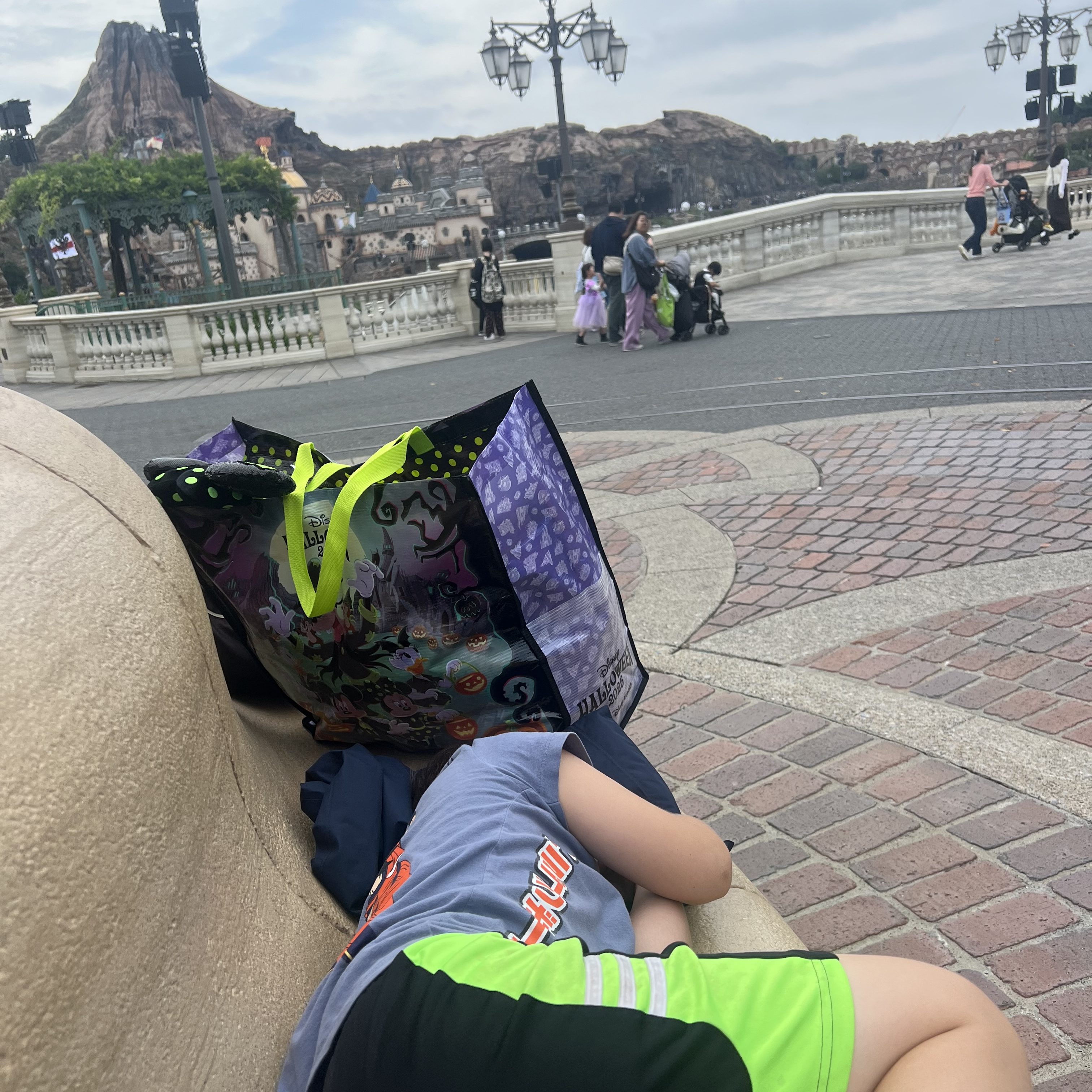
Strategic Naps – there are all sorts of arguments on if you should nap or not while trying to adjust to a new time zone. Our answer: It depends. We always try to plan our long flights to land in the new country in the afternoon at the earliest, this then limits the amount of time we need to stay awake and usually guarantees we have a room quickly after landing. We will try to stay awake that first night until 7pm, which is usually possible given the excitement of being in a new location. The second and third day we only nap if we think staying awake will affect our kid’s ability to enjoy the day. If a nap is needed, we prioritize the morning to explore and tire them out, then nap in the early afternoon to make sure they aren’t sleeping too close to bedtime. We also limit the naps to about 1hr. By the third or fourth day, we don’t usually nap as we try to shift to the new time, however, our son is known to sometimes take mini-naps during the day where ever we are. We usually let this happen, keeping one adult with him and letting the other explore nearby.
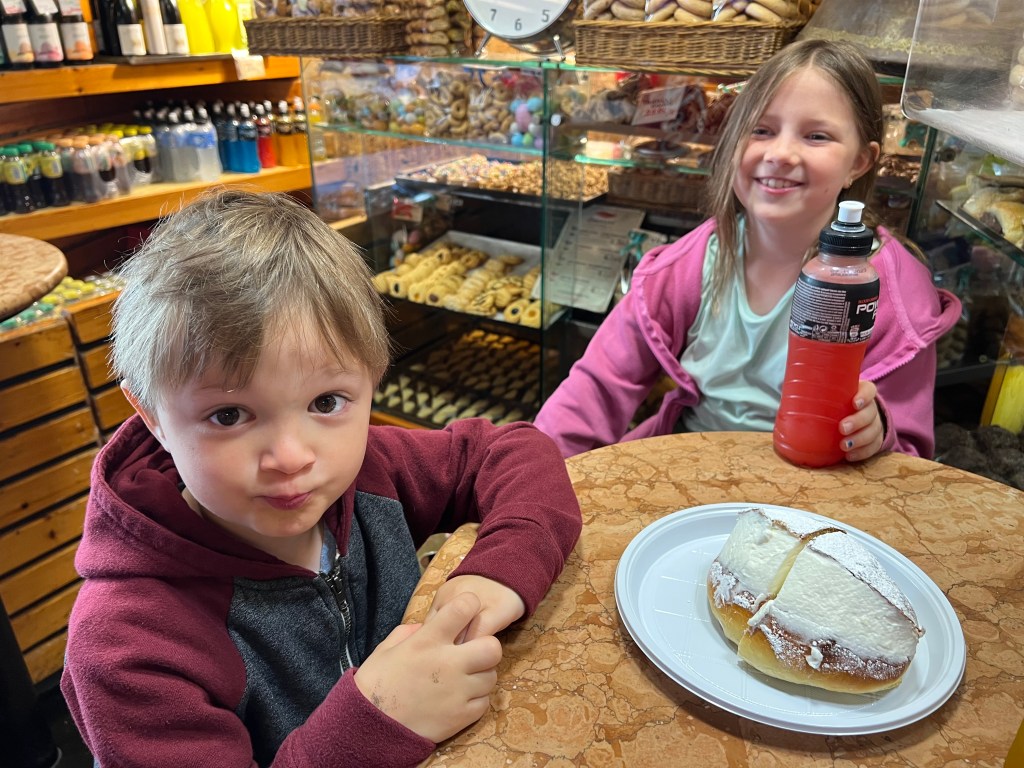
Managing Eating – many families just think about sleep as part of jet lag, but we have found that a huge part of it is the change in our eating habits. Our bodies are very used to an eating schedule, so it is often hard for our kids to eat during the day and they wake up in the middle of the night starving. We have found that small meals throughout the day helps rather than big meals (as often times big meals lead to the “I am not hungry” comment). We have also learned to plan for snacks in the middle of the night. Some hotels offer 24hrs room service, so you can always look for a hotel with that option, or make sure you buy some small meals/snacks to have throughout the night. This will ensure that kids can wake up, eat a snack, and then try to head back to bed. We often try to stock up on snacks that are known to them to make it easier, like McDonalds chicken nuggets 🙂
Midnight activities – When the kids do wake up in the middle of the night, there are a couple options we allow. If everyone is awake, which is often the case, we will cuddle up and watch a show for a couple hours. If everyone is not awake, we will let them watch on their iPad, but we don’t let them play games as that is more active. Another great option are kid podcasts – this allows them to listen to a story while still having their eyes closed. There are a couple great ones I will post at the bottom that you can pre-download. If they wake up between 12-2am, we will allow them to stay awake for a couple hours and then everyone will try to sleep or rest again until at least 5am.
Plan your activities accordingly – When we do the planning for our trips, we make sure to take into account jet lag for the first couple of days. This means we try to front-load activities that kids will be excited about as a way to encourage them staying up and getting out of the hotel. We also don’t do group tours or long tours these first couple of days as our kids will be slower and we need more flexibility to go at their pace or stop for a quick break. It is also helpful to know at what point in the day it is normally your kid’s bedtime. For example, when we were in Japan, we knew that the normal 9pm bedtime was about 11am Japan time, so we always prepared for the “slump” of jet lag to hit between 11-1pm. We would remind ourselves and the kids that we were all likely to be tired and a little irritable around this time and that we had to be patient with ourselves and each other. We would use this time to make sure everyone ate in order to get some energy. We often let our kids get a little soda or ice cream along with some nutritious food as a treat to get them through. Once they get through the initial slump, usually they get a second wind for the afternoon/evening.
Medicines – This section is a little catch-all for a couple medicines that can be helpful. Of course, always make sure you talk with your doctor based on your needs. First, let’s tackle the topic of melatonin, which I know many families use. We have never used melatonin a lot with our kids. Personally, I think this has helped because our kids are used to the idea of laying in bed and trying to fall asleep which is often a skill needed with jet lag. When we do use it, our kids only need a small dose (we use 0.5mg gummies). Sometimes we will use this when they wake up in the middle of the night after they have had some awake time to get them some more hours before bed. We also might use this for an afternoon nap if our kids are really dysregulated emotionally and we know they just need to sleep. If you have never used Melatonin, I recommend trying it before the trip, as we have found it can have adverse side effects for some. The other two medicines we have on hand are children’s Tylenol and Miralax. The Tylenol is good to have on hand incase jet lag leads to headaches – obviously prioritize them getting sleep first and only use as needed. We also find Miralx to be helpful to have on hand because just like your eating habits have a routine, so do your bowel movements, and jet lag will throw those off. Miralax has been helpful for us to make sure no one becomes uncomfortable. Finally, make sure everyone hydrates!! We drink way less water while we travel, just because its less convenient and we are on the move. We try to make sure we are drinking water or juice as much as we can.
Take advantage of the time change! Sometimes the time change can have a huge advantage, allowing you to wake up earlier and hit the sights before most of the tourists are out. We tend to adjust our plans to follow our bodies rhythm – getting out earlier in the day and going to bed earlier in the evening. Especially with kids, this works well as there is less to do in the evening. Don’t feel like you need to get on a certain routine – follow your body and your kid’s cues to find a routine that works best for you during vacation. For us, that usually means being awake between 4-5am, allowing kids to have some downtime in the morning, going to breakfast at 6am and heading out for an early activity by 7:30am. We will also use that early morning time to do showers, organize the rooms, etc. For the evenings, we regularly use this time to tag team as adults, letting one stay back with kids while the other goes out and explores something on their own. Once you accept jet lag and find out how to work within the limits, your vacation will become less stressful vs. trying to force something that doesn’t come naturally.
Here are some kid podcast recommendations – but there are many others! Have your kid try some out before you leave so you can see what they like and download:
- Go Kid Go – offers multiple series that spans ages, my kids like “Snoop & Sniffy” and “R.L. Stine’s Story Club” – all are free
- Wondery – offers options with well known characters, like Frozen & Sesame Streets. Seems to be for younger ages.
- PBS – Listen to some of the kid’s shows, like Arthur, OddSquad, and Pinkalicious
 Schenanigans Around the World
Leave a comment